
Closing costs when buying a home in Canada
The costs you pay on closing day besides your down payment, from land transfer tax to legal fees, and how much to budget.
Key takeaways
- Closing costs are paid on top of your down payment.
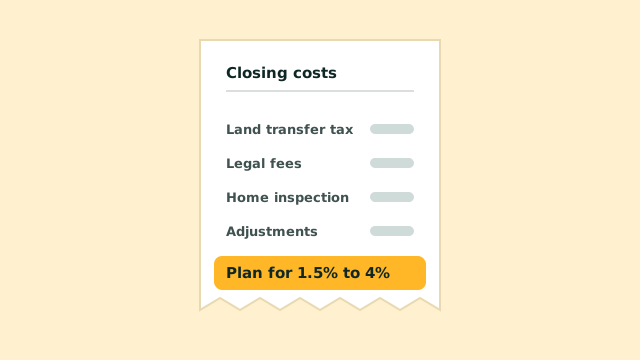
- A common rule of thumb is 1.5% to 4% of the purchase price.
- Land transfer tax is often the biggest one, and it varies by province.
What are closing costs?
Closing costs are the fees and taxes you pay to complete a home purchase. They're separate from your down payment, and lenders usually want to see that you have money set aside for them.
The main costs
- Land transfer tax: charged by most provinces, based on the price. Some cities, like Toronto, add their own. Alberta and Saskatchewan charge smaller registration fees instead.
- Legal or notary fees: for reviewing documents, registering the title and handling the money transfer.
- Home inspection: usually a few hundred dollars, and worth it.
- Title insurance: protects against title problems. Often a few hundred dollars.
- Appraisal: sometimes required by the lender. Sometimes they cover it.
- Adjustments: repaying the seller for property taxes, condo fees or utilities they've already paid past your closing date.
- Sales tax on mortgage insurance: in some provinces, if you put down less than 20%.
How much to budget
A common rule of thumb is 1.5% to 4% of the purchase price. On a $600,000 home, that's roughly $9,000 to $24,000. Where you land depends mostly on your province's land transfer tax and whether you qualify for a first-time buyer rebate.
Don't forget the costs around closing day too: moving, setting up utilities, and any furniture or repairs you'll need right away.
Can you reduce them?
- Check if you qualify for a first-time buyer land transfer tax rebate.
- Compare quotes from lawyers or notaries.
- Ask whether your lender covers the appraisal.
This guide is general information, not financial advice. Rules and products change, and every situation is different. A licensed mortgage broker can tell you what applies to you.