
What is a HELOC, and how does it work?
A home equity line of credit lets you borrow against your home as you need it. Here is how HELOCs work in Canada, and when they make sense.
Key takeaways
- A HELOC is a revolving line of credit secured by your home.
- The line itself can go up to 65% of your home's value, and up to 80% combined with your mortgage.
- Rates are usually variable, and minimum payments can be interest only.
How a HELOC works
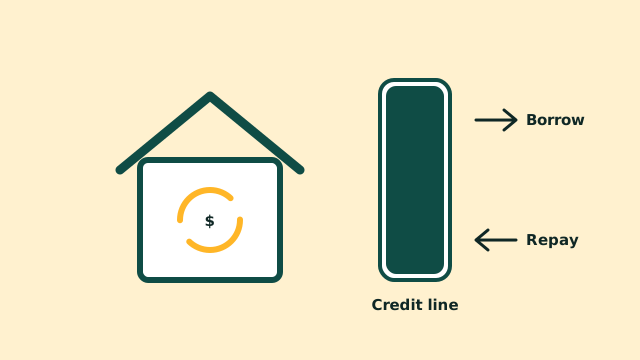
A home equity line of credit (HELOC) is a line of credit secured by your home. You get a credit limit, borrow what you need when you need it, repay it, and borrow again. You only pay interest on what you've actually used.
Many lenders offer a HELOC alongside a regular mortgage in one package, sometimes called a readvanceable mortgage. As you pay down the mortgage, the room on your line of credit can grow.
How much you can borrow
In Canada, the revolving line of credit part can generally go up to 65% of your home's value. Combined with your mortgage, the total can usually reach up to 80%.
For example, on a home worth $700,000 with $400,000 left on the mortgage, 80% of the value is $560,000. That could leave room for a line of credit of up to about $160,000, if you qualify.
Rates and payments
- Variable rate: HELOC rates usually move with your lender's prime rate, often a bit above it.
- Interest-only minimums: many HELOCs only require you to pay the interest each month. That keeps payments low, but the balance won't go down unless you pay more.
- No fixed end date: unlike a mortgage, you're not forced to pay it off on a schedule.
Good uses, and the risks
HELOCs can be a flexible, lower-cost way to pay for renovations, cover large planned expenses, or keep an emergency cushion. The flexibility is also the risk: it's easy to keep a balance for years. And because the loan is secured by your home, falling behind puts your home at risk.
If you plan to use a HELOC to pay off other debts, have a plan to stop new debt from building up again. Otherwise you can end up with both.
HELOC or refinance?
If you need a lump sum once, refinancing your mortgage may get you a lower rate. If you need money over time, or want access "just in case," a HELOC may suit you better. A broker can compare both for your situation.
This guide is general information, not financial advice. Rules and products change, and every situation is different. A licensed mortgage broker can tell you what applies to you.